
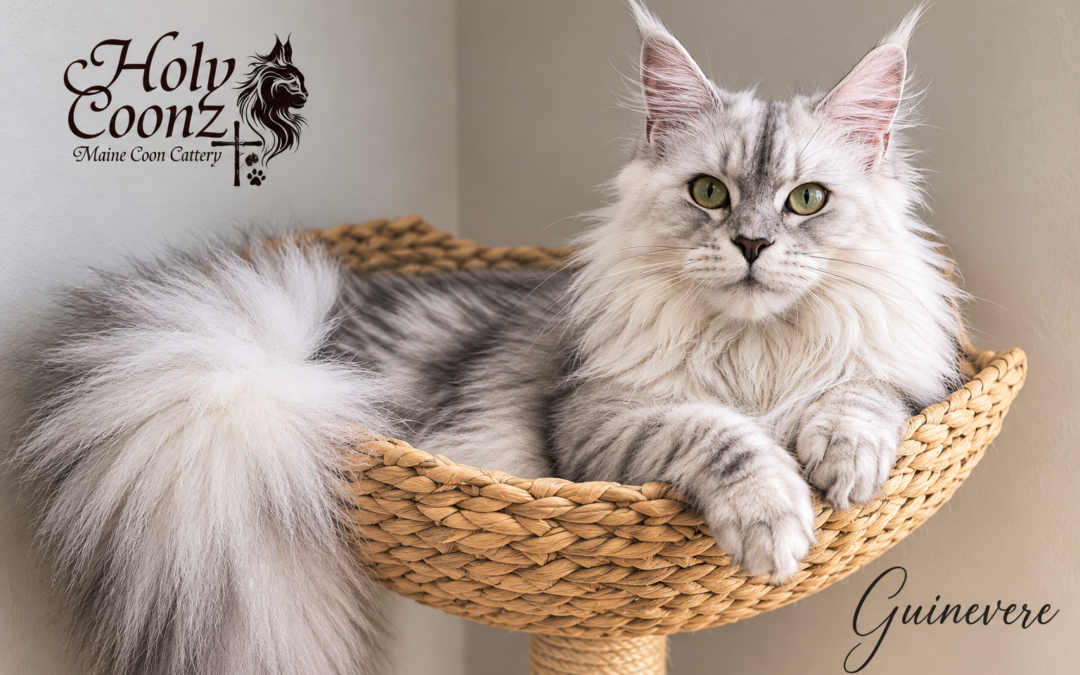
By Terri Brock | HolyCoonz Maine Coon Cattery
When a Maine Coon breeder says their cats are “health tested,” what does that really mean?
Does it mean a DNA test was performed? A veterinarian examined the cat? Or has the breeder taken a more comprehensive approach to understanding the health, genetics, and family history of the cats in their breeding program?
These are important questions for any family considering welcoming a Maine Coon kitten.
At HolyCoonz, we believe responsible breeding begins long before a kitten is born.
Our approach includes DNA health screening, genetic profiling and diversity, blood typing, cardiac evaluations, hip screening, pedigree research, veterinary collaboration, and long-term health follow-up.
No screening program can guarantee a perfectly healthy kitten. But thoughtful testing, ongoing evaluation, and informed breeding decisions can help reduce avoidable risks.
And understanding the difference matters.
DNA Health Screening: An Important Starting Point
DNA testing can identify known inherited genetic variants associated with conditions relevant to Maine Coons, including hypertrophic cardiomyopathy (HCM), spinal muscular atrophy (SMA), and pyruvate kinase deficiency (PKDef).
These results provide valuable information when evaluating potential breeding cats and planning future pairings.
But a negative DNA result does not mean a cat can never develop an inherited condition.
HCM is an important example. A Maine Coon may test negative for known HCM-associated variants and still develop heart disease.
That’s why DNA screening is an essential starting point—not the finish line.
The [UC Davis Veterinary Genetics Laboratory](https://vgl.vetmed.ucdavis.edu/test/maine-coon-hcm) provides additional information about Maine Coon HCM genetic testing and its limitations.
Genetic Profiling and Diversity: Looking Beyond the Basics
At HolyCoonz, our genetic evaluations go beyond screening for inherited diseases.
We utilize Wisdom Panel Optimal Selection Feline testing to obtain additional genetic information that helps inform our breeding decisions.
DNA Profiling and Genetic Identification
DNA profiling provides an individual genetic identification record using markers located at specific positions across multiple chromosomes.
These markers can support biological parentage verification and accurate pedigree records.
Maintaining reliable genetic and pedigree information is an important part of responsible breeding.
Understanding Genetic Diversity
Every kitten inherits genetic material from both parents.
At particular locations throughout the genome, the inherited genetic variants may be different, known as heterozygous, or identical, known as homozygous.
Both are normal features of genetics.
However, excessive genetic similarity between breeding partners can increase the likelihood that their offspring inherit identical copies of certain genetic variants, including potentially harmful recessive variants.
Genetic diversity information can help us evaluate prospective breeding pairs alongside pedigree relationships, health-screening results, temperament, structure, and overall veterinary health.
Genetic diversity alone cannot guarantee healthy kittens, and no single genetic score can determine whether two cats should be bred.
At HolyCoonz, our responsibility is not simply to obtain genetic test results. It is to understand those results and use them thoughtfully.
Families interested in learning more can explore [Wisdom Panel Optimal Selection’s feline genetic testing program](https://optimal-selection.com/products/optimal-selection-advanced-feline).
Feline Blood Typing: Why It Matters Before Kittens Are Born
Did you know that cats have different blood types—and that understanding those blood types can help protect newborn kittens?
Cats have three major blood types: A, B, and AB.
While most families may never need to think about their cat’s blood type, this information can be critically important in a breeding program.
At HolyCoonz, feline blood-type evaluation is included in our comprehensive DNA screening through Wisdom Panel Optimal Selection Feline testing.
This testing evaluates four known blood-type-associated genetic variants and provides a predicted blood type based on those findings.
Wisdom Panel reports approximately 99% agreement between its genetic blood-type predictions and traditional laboratory blood typing in domestic cats. Because not every possible genetic variant is known, veterinary confirmation may sometimes be appropriate.
Why Is Blood Type Important in Breeding?
Certain blood-type combinations between a mother cat and her kittens can result in a serious condition called neonatal isoerythrolysis (NI).
For example, when a type B queen gives birth to type A or AB kittens, antibodies in her colostrum—the first milk newborn kittens receive—can attack their red blood cells.
Affected kittens may initially appear healthy but develop severe anemia and other potentially life-threatening complications after nursing.
Understanding blood types before breeding helps breeders and their reproductive veterinarians recognize potential incompatibilities and plan appropriately.
Not every feline DNA testing package includes blood-type analysis. It is important for breeders to understand exactly which tests they are receiving and how to interpret the results.
At HolyCoonz, we believe responsible breeding means understanding these risks before a mating takes place—not discovering them after kittens are born.
Because protecting kittens begins long before their first breath.
For additional information, see [Wisdom Panel Optimal Selection’s feline testing FAQ](https://optimal-selection.com/pages/faq-cat).
HCM: Why We Look at the Heart Itself
Hypertrophic cardiomyopathy (HCM) is an important health concern in Maine Coons.
At HolyCoonz, cardiac screening is an ongoing commitment—not simply a one-time requirement before breeding.
Our breeding cats undergo regular echocardiograms, with annual screening forming part of our current program.
An echocardiogram allows a veterinary cardiologist to evaluate the heart’s structure and function rather than relying exclusively on DNA test results.
Because HCM can develop later in life, one normal echocardiogram does not mean a cat will remain free of the disease.
We also recognize the importance of following cardiac health over time and considering the health history of parents, relatives, and offspring.
By maintaining long-term health records and working closely with our veterinary cardiologist, we aim to make increasingly informed decisions that benefit both our breeding cats and future generations.
The [PawPeds HCM health program](https://pawpeds.com/cms/index.php/en/health-programmes/hcm/recommendations) offers additional information about repeated cardiac screening and why genetic testing alone is insufficient.
Hip Screening Matters Too
Hip dysplasia can affect Maine Coons, making orthopedic screening another important part of responsible breeding evaluations.
At HolyCoonz, our breeding cats undergo preliminary hip radiographs before breeding, followed by an OFA hip evaluation at two years of age.
A Maine Coon may have beautiful structure, wonderful temperament, and an impressive pedigree—but none of those qualities can tell us exactly what the hip joints look like.
For that, we need to evaluate the joints themselves.
Hip screening provides additional information to help determine whether a cat is suitable for our breeding program.
The [PawPeds hip dysplasia health program](https://www.pawpeds.com/cms/index.php/en/health-programmes/hd/recommendations) explains why evaluating breeding cats’ hips is important, even when they appear healthy.
The Whole Cat Matters
Responsible breeding goes beyond individual test results.
We also consider overall veterinary health, temperament, development, pedigree, family history, and information available about previous generations.
Every HolyCoonz kitten is raised with our commitment to health, temperament, and quality. But becoming a future breeding cat requires an additional level of evaluation.
A beautiful, healthy Maine Coon may be an exceptional family companion or show cat and still not be the right candidate for a breeding program.
Future kings and queens are evaluated through an even narrower lens because their health, structure, genetics, and temperament may influence generations to come.
Not every exceptional Maine Coon needs to become a breeding Maine Coon.
Sometimes, the responsible decision is not to breed a cat at all.
A Collaborative Approach to Veterinary Care
At HolyCoonz, responsible breeding is not something we approach alone.
Our breeding program is supported by established relationships with veterinary professionals who are familiar with our cats and our commitment to proactive, individualized care.
We work closely with a reproductive veterinary specialist, a veterinary cardiologist, our primary veterinary clinic, and an emergency veterinary hospital familiar with HolyCoonz.
Each plays an important role in supporting the health and well-being of our breeding cats and kittens.
From reproductive planning and advanced health screening to routine wellness care and unexpected medical needs, these relationships help us make informed decisions at every stage.
For us, this collaborative approach is an essential part of responsible breeding.
Exceptional care begins long before a kitten is born.
Behind the Scenes at HolyCoonz: Toby and Guinevere
Some of this important work is happening at HolyCoonz right now.
Our prospective breeding cats, Toby and Guinevere, have completed their DNA health screening and have both received normal findings on their cardiac evaluations.
Guinevere completed her echocardiogram in June 2026, and Toby completed his on October 17, 2026.
Their remaining planned pre-breeding health-screening milestone is hip evaluation.
Once those examinations are completed and their results reviewed, we can make informed decisions about the next steps in their breeding journey.
What may look like a quiet period from the outside can involve months of growth, careful observation, genetic testing, veterinary appointments, and waiting for results.
A cat doesn’t become a HolyCoonz king or queen simply because that was our original plan.
Their health comes first.
If the information tells us to change our breeding plans, we change them.
Our Commitment Continues After Adoption
At HolyCoonz, our responsibility doesn’t end when a kitten joins its forever family.
We conduct annual wellness and health surveys with our kitten families to stay connected and learn how our Maine Coons are doing as they grow and mature.
These follow-ups provide valuable information about the long-term health of kittens from our breeding program.
When families share health updates, we can consider that information alongside veterinary findings, parental health screenings, pedigrees, and the history of related cats.
Although family-reported information cannot replace veterinary diagnoses, ongoing communication can help us recognize potential health patterns across generations and make more informed breeding decisions.
It also allows us to maintain meaningful relationships with the families who have entrusted us with bringing a Maine Coon into their lives.
For us, responsible breeding doesn’t end at adoption. It’s a lifelong commitment to learning, improving, and supporting our HolyCoonz families.
Frequently Asked Questions About Maine Coon Health Testing
Does a negative DNA test mean a Maine Coon cannot develop HCM?
No. Genetic tests identify particular known variants, but they cannot detect every possible cause of HCM. This is why echocardiograms remain an important part of cardiac screening.
Why do responsible breeders perform hip evaluations?
Hip dysplasia can affect Maine Coons, and appearance alone cannot establish the condition of a cat’s hip joints. Radiographic screening provides additional information for breeding decisions.
Why is blood typing important for breeding cats?
Certain combinations of maternal and kitten blood types can lead to neonatal isoerythrolysis, a potentially life-threatening condition in newborn kittens. Understanding blood types before breeding helps breeders and veterinarians plan appropriately.
Can health testing guarantee that a kitten will never develop a medical condition?
No. Responsible screening helps identify risks and informs breeding decisions, but no breeder can eliminate every genetic or medical possibility.
Responsible Breeding Is About Reducing Risk
No responsible breeder can promise that a kitten will never develop a health condition.
Health screening, genetic evaluation, veterinary collaboration, and long-term follow-up are about reducing avoidable risks and making breeding decisions with the best information available.
At HolyCoonz, we believe that responsibility extends beyond producing beautiful Maine Coon kittens.
It means considering the health of the cats entrusted to our care, the families who will welcome their kittens, and the generations that may follow.
We’d Love to Hear From You!
Before reading this article, which of these health screenings did you already know about—and which surprised you?
We welcome your questions and would love to hear your thoughts. We believe education should be part of the relationship between breeders and the families who love their cats.
Purposefully Bred. Properly Raised. Lifetime Supported.
“Every good and perfect gift is from above.” — James 1:17