
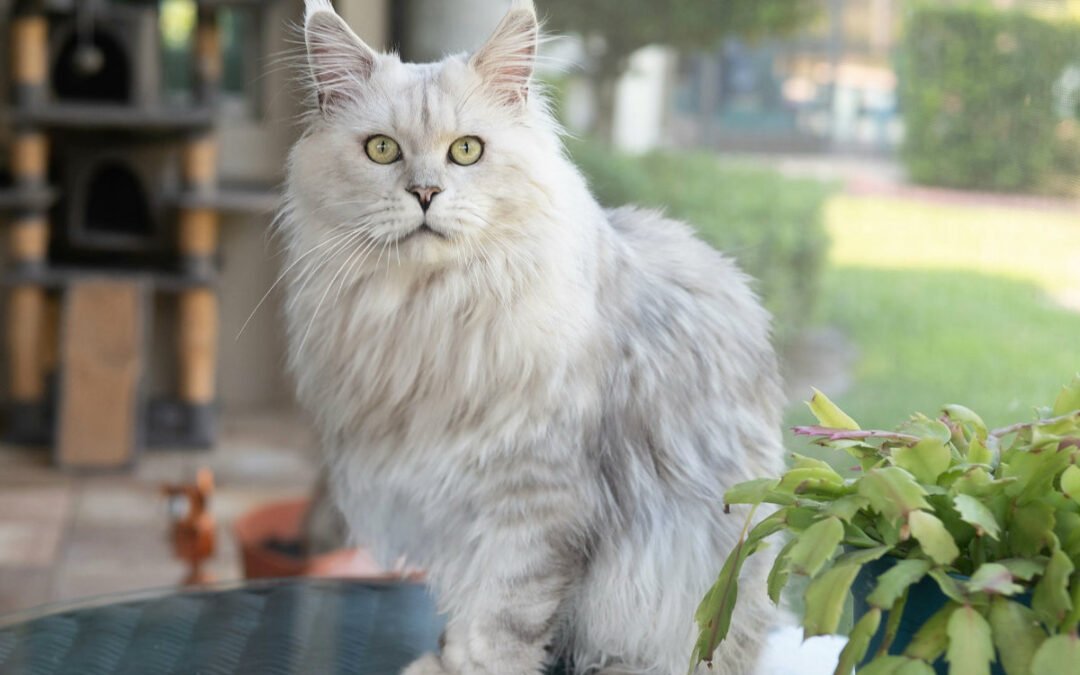
A beautiful Maine Coon kitten can capture your heart in seconds.
Those magnificent ears, oversized paws, expressive eyes, and wonderful personalities make it easy to understand why so many families fall in love with this extraordinary breed.
But choosing a Maine Coon kitten should involve much more than falling in love with a photograph.
Before you choose a kitten, choose the breeder.
At HolyCoonz, we believe every family deserves to know what responsible breeding looks like. That includes families who may ultimately choose a different cattery.
A reputable breeder should welcome thoughtful questions. In fact, we believe the more you understand about health screening, genetics, breeding decisions, kitten development, and ongoing support, the better prepared you’ll be to recognize a breeder who shares your priorities.
Here are the questions we encourage every prospective Maine Coon family to ask—including families considering HolyCoonz.
1. What Health Testing Do You Perform Beyond DNA?
This is one of the most important questions you can ask.
When a breeder says their cats are “health tested,” ask what that means.
Does it mean a DNA screening panel? A routine veterinary examination? Or a comprehensive program that also evaluates cardiac health, hips, and reproductive considerations?
DNA testing is valuable. It can identify known genetic variants associated with certain inherited conditions. But it cannot identify every possible health problem.
For example, a Maine Coon can test negative for a known genetic variant associated with hypertrophic cardiomyopathy (HCM) and still develop heart disease.
At HolyCoonz, our approach includes comprehensive DNA screening, genetic evaluation, cardiac screening, hip evaluations, and other veterinary assessments.
We also use Wisdom Panel Optimal Selection feline testing to help us understand inherited health risks, genetic diversity, and blood-type information.
A good follow-up question is: “Can you explain what each test tells you—and what it cannot tell you?”
A responsible breeder should understand the limitations of their testing, not simply display a collection of certificates.
For a closer look at these screenings, read our companion article, [Maine Coon Health Testing: What Responsible Breeders Should Test Before Breeding](/2026/10/21/maine-coon-health-testing/).
2. How Often Are Your Breeding Cats’ Hearts Rechecked?
A normal heart examination is encouraging. But it isn’t a lifetime guarantee.
Hypertrophic cardiomyopathy is an important concern in Maine Coons because it can develop as cats mature.
That’s why it’s worth asking whether a breeder performs echocardiograms, who conducts those examinations, and whether screening continues over time.
An echocardiogram uses ultrasound to evaluate the heart’s structure and function. It provides information that a DNA test alone cannot supply.
At HolyCoonz, annual echocardiograms are part of our current breeding-cat screening program. We work with a veterinary cardiologist and recognize the importance of following cardiac health over time.
We also consider information about parents, relatives, and offspring when evaluating our breeding lines.
The [UC Davis Veterinary Genetics Laboratory](https://vgl.vetmed.ucdavis.edu/test/maine-coon-hcm) explains the limitations of Maine Coon HCM genetic testing, while the [PawPeds HCM health program](https://pawpeds.com/cms/index.php/en/health-programmes/hcm/recommendations) discusses repeated cardiac screening.
Ask to see dated results, not just a statement that a cat was once cleared.
The goal isn’t to find a breeder who promises that HCM can never occur. It’s to find one who takes the risk seriously.
3. Do You Screen Your Breeding Cats for Hip Dysplasia?
Maine Coons are known for their substantial size and impressive structure.
But large size and beautiful movement don’t tell us everything about the health of their hip joints.
Hip dysplasia can affect Maine Coons, and some cats may have changes that aren’t obvious during an everyday examination.
Ask whether breeding cats receive hip radiographs and how the results influence breeding decisions.
At HolyCoonz, our breeding program includes preliminary hip radiographs before breeding, followed by OFA hip evaluation at two years of age.
We believe orthopedic screening deserves the same thoughtful attention as other inherited health concerns.
A responsible breeder should be able to explain their screening approach and what they would do if an evaluation raised concerns.
4. What Happens If a Breeding Cat Doesn’t Pass a Health Screening?
This question may tell you more about a breeder’s priorities than almost anything else.
It’s relatively easy to talk about testing when the results are favorable.
But what happens when they aren’t?
Does the breeder postpone a planned mating? Seek additional veterinary guidance? Reevaluate whether the cat should remain in the breeding program?
Or do they proceed because families are waiting for kittens?
At HolyCoonz, our breeding plans are always conditional on health evaluations and the well-being of our cats.
We can admire a Maine Coon’s beauty, temperament, and pedigree and still decide that breeding isn’t the right choice.
A cat doesn’t become a HolyCoonz king or queen simply because that was our original plan.
Their health comes first.
We encourage families to ask every breeder how they handle disappointing results. Responsible decisions aren’t always the easiest ones, but they’re among the most important.
5. Can You Explain Your Pedigrees and Coefficient of Inbreeding?
A pedigree should be more than a collection of impressive names.
It tells a story about ancestry, relationships, and the cats whose genetic contributions may influence future generations.
Ask a breeder how they research pedigrees and whether they evaluate the coefficient of inbreeding, commonly called COI.
COI estimates the probability that an offspring inherits two copies of a gene from a shared ancestor. Its interpretation depends on the pedigree information and number of generations used.
A low COI doesn’t guarantee a healthy kitten. A higher COI doesn’t automatically mean a cat will develop disease.
But understanding relatedness is important when making breeding decisions.
At HolyCoonz, we consider pedigrees, family history, genetic health results, and available genetic diversity information when evaluating potential pairings.
Wisdom Panel Optimal Selection offers genetic diversity analysis that can complement traditional pedigree research. These approaches measure different things, so neither should be treated as a complete replacement for the other.
A thoughtful breeder should be able to explain why two particular cats may—or may not—be suitable breeding partners.
And the explanation should involve far more than coat color or appearance.
6. How Are Your Kittens Raised and Socialized?
Health testing matters enormously. So does the environment in which kittens grow.
Ask where the kittens are raised, what daily interaction they receive, and how the breeder prepares them for family life.
Are kittens exposed to normal household activities? Do they receive gentle, age-appropriate handling? Are their individual personalities observed as they develop?
At HolyCoonz, we raise our kittens in our home, surrounded by care, attention, and opportunities for appropriate socialization.
We believe raising a kitten well means paying attention to the individual—not simply following the same routine for every kitten.
Some kittens are naturally bold and adventurous. Others need a little more time to explore new experiences.
Our responsibility is to help each kitten develop confidence at its own pace.
When speaking with a breeder, ask how they learn about each kitten’s personality and how they help families find a companion suited to their lifestyle.
The right kitten is not always the first kitten whose photograph catches your eye.
7. Who Provides Veterinary Care for the Breeding Cats and Kittens?
Breeding cats responsibly involves situations that may require different kinds of veterinary expertise.
Ask who provides routine care, whether the breeder has access to reproductive veterinary services, and what happens when an unexpected medical concern arises.
At HolyCoonz, we maintain established relationships with a reproductive veterinary specialist, a veterinary cardiologist, our primary veterinary clinic, and an emergency veterinary hospital familiar with our cats.
These relationships support our decision-making through reproductive planning, screening, routine care, and unexpected medical situations.
No breeder can predict every complication.
What matters is whether they have a thoughtful plan, appropriate veterinary relationships, and a willingness to seek professional help when needed.
We believe responsible breeding should never depend on guesswork when qualified veterinary guidance is available.
8. What Happens After My Kitten Comes Home?
A breeder’s responsibility shouldn’t end when the kitten leaves.
Ask what support is available after adoption.
Will the breeder answer questions about settling in, nutrition, behavior, or development? Is there a written agreement? What health guarantee is provided, and what are its actual terms?
It’s important to understand the difference between a meaningful health guarantee and a promise that no responsible breeder can make.
A guarantee should clearly explain what is covered, the time period, any requirements, and the remedy if a covered condition occurs.
At HolyCoonz, ongoing communication is an important part of our relationship with families.
We also conduct annual wellness and health surveys to learn how our Maine Coons are doing as they mature.
These updates help us stay connected and may provide valuable information about long-term health patterns among related cats.
Family-reported information doesn’t replace veterinary diagnoses, but it contributes to our broader commitment to learning from the cats we’ve bred.
We believe a responsible breeder should care about the kitten you bring home—and the adult cat that kitten becomes.
That’s what lifetime support means to us.
9. Are You Comfortable With Families Asking Difficult Questions?
A responsible breeder should welcome genuine curiosity.
You shouldn’t feel embarrassed asking about heart screenings, hip results, genetic risks, pedigrees, contracts, or veterinary care.
And you shouldn’t feel pressured to send money before you’ve had an opportunity to understand the breeder’s practices.
Look for someone who communicates clearly, answers questions respectfully, and is willing to explain the reasoning behind their decisions.
It’s also reasonable for a breeder to ask questions about you.
A thoughtful adoption process is a two-way conversation. The breeder should want to understand your home, lifestyle, expectations, and readiness to care for a Maine Coon throughout its life.
Be cautious of pressure tactics, guarantees that sound too good to be true, or promises about kittens that haven’t even been conceived.
Responsible breeding requires patience, transparency, and sometimes the willingness to say, “We don’t know yet.”
That answer can be far more reassuring than an unrealistic promise.
10. What If I’m Hoping for a Maine Coon Kitten for Christmas?
As the holiday season approaches, we understand why families dream of welcoming a beautiful Maine Coon kitten at Christmas.
The excitement is real. So is the temptation to find a kitten quickly.
But a Maine Coon is not a seasonal purchase.
This is a living companion who may share your home and heart for many years.
At HolyCoonz, we will not have kittens available for Christmas this year — and we’d rather tell you that honestly than rush you into a decision.
But don’t let that stop you.
December is a wonderful time to begin: join our reservation waitlist, start learning with us, get your kitten supply list, and let us walk beside you.
Ask us everything. We’ll answer everything.
By the time your kitten arrives, you won’t be a stranger — you’ll be family.
That’s what white-glove means to us.
The best gift is worth waiting for.
Our future breeding plans remain conditional on health-screening results and the well-being of our cats, God willing. Joining our reservation waitlist is the beginning of a relationship, not a promise of a particular litter or arrival date.
Frequently Asked Questions About Choosing a Maine Coon Breeder
What health tests should a responsible Maine Coon breeder perform?
A responsible Maine Coon breeding program should consider DNA screening for relevant inherited variants, cardiac evaluation by echocardiography, hip screening, and appropriate reproductive health assessments. Breeders should explain their testing schedules, limitations, and how results influence breeding decisions.
Is a DNA test enough to prove a Maine Coon is healthy?
No. DNA panels screen for specific known variants, not every inherited or acquired condition. A Maine Coon can test negative for known HCM-associated variants and still develop heart disease. Veterinary examinations and appropriate repeat screening remain important.
What are warning signs when choosing a Maine Coon breeder?
Warning signs include pressure to pay immediately, refusal to discuss health screening, vague or unrealistic health guarantees, unwillingness to explain contracts, and promises about future litters or dates that cannot be assured. Evaluate the breeder’s overall practices rather than relying on any single claim.
Should I join a Maine Coon waitlist before kittens are born?
You may choose to join a breeder’s reservation or notification process before kittens are born, provided you understand the terms. Ask about fees, refunds, placement procedures, and how availability is determined. No responsible breeder should guarantee a pregnancy, litter size, or delivery date.
Choosing With Confidence—and With Heart
We know how exciting it is to imagine bringing a Maine Coon into your family.
But we hope you’ll remember something even more important than the excitement of finding a kitten:
The breeder you choose helps shape the beginning of your cat’s story.
Ask the difficult questions. Look beyond beautiful photographs. Take the time to understand the answers.
And choose someone whose commitment to health, responsible decisions, transparency, and long-term support reflects the kind of beginning you want for your future companion.
At HolyCoonz, we don’t expect families to take our word for it.
We welcome the questions.
We’d Love to Hear From You
What’s the most important question you would ask a Maine Coon breeder?
Or, if you’ve already welcomed a Maine Coon into your family, what do you wish you’d known before choosing your breeder?
We’d love to hear your experiences and questions. Your curiosity may help another family make a more informed decision.
Purposefully Bred. Properly Raised. Lifetime Supported.
“Every good and perfect gift is from above.” — James 1:17